Margin vs Markup: The Difference and How to Price Correctly
Margin vs markup explained: both formulas side by side, a margin-to-markup conversion table, pricing for a target margin, and what fees and GST really cost.

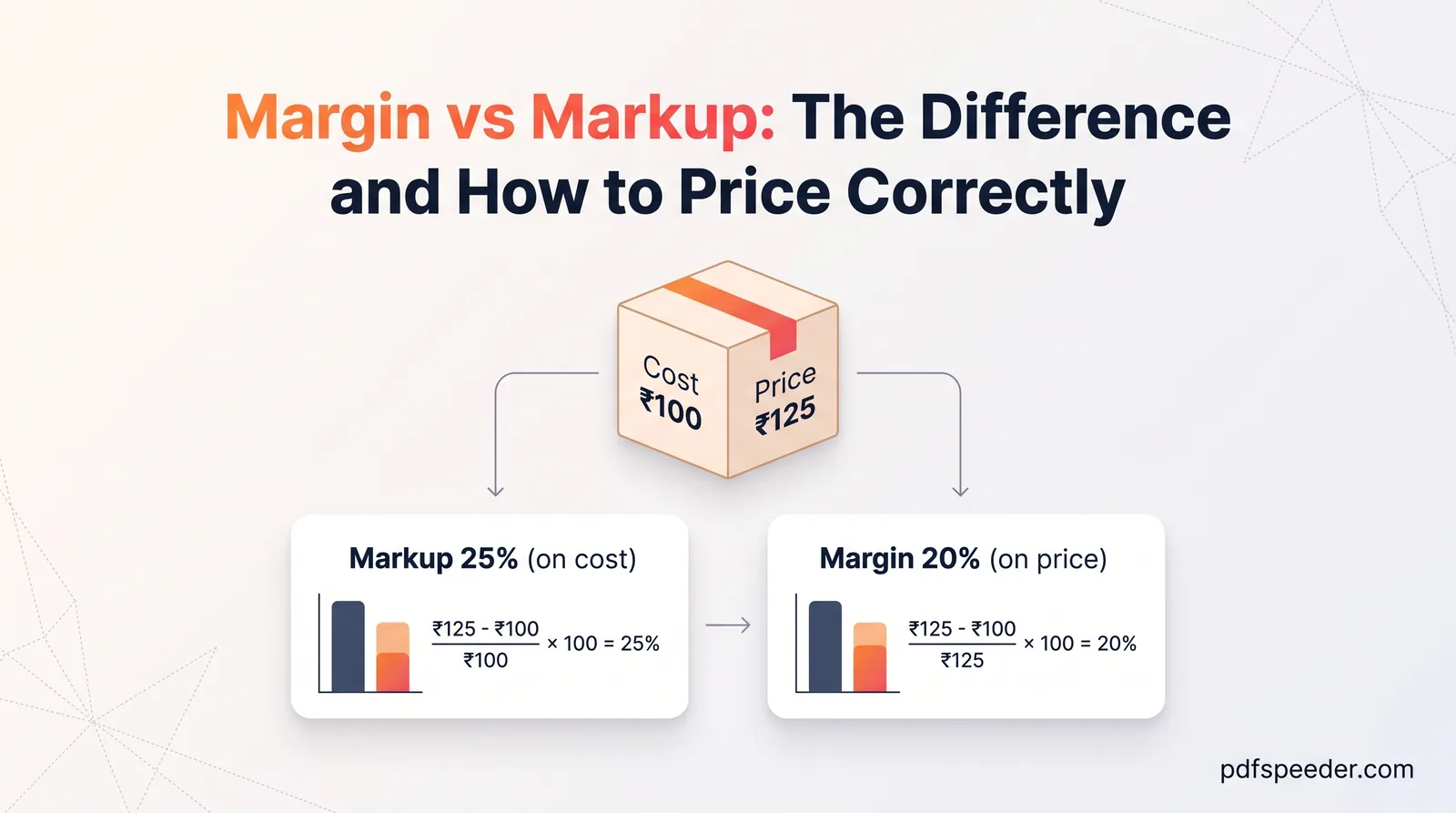
Margin and markup both measure profit, but against different numbers: margin is profit as a percentage of the selling price, while markup is profit as a percentage of the cost. Buy something for ₹640 and sell it for ₹800, and your ₹160 profit is a 20% margin but a 25% markup. Mixing up margin vs markup is an easy way to price below what you intended, so below you'll find both formulas, a conversion table and a worked example that includes marketplace fees and GST.
On this page
Margin and markup in one sentence each
- Margin is the share of the selling price you keep as profit.
- Markup is how much you add on top of what the item cost you.
Same profit, different yardsticks. Because the selling price is always bigger than the cost on a profitable sale, the margin is always the smaller of the two numbers. Margin can never reach 100%, which would mean the item cost nothing, but markup has no ceiling: a 300% markup is an ordinary 75% margin.
The formulas side by side
Write percentages as decimals in these formulas, so 20% is 0.20:
profit                    = selling price − cost
margin                    = profit ÷ selling price
markup                    = profit ÷ cost

selling price from margin = cost ÷ (1 − margin)
selling price from markup = cost × (1 + markup)

markup                    = margin ÷ (1 − margin)
margin                    = markup ÷ (1 + markup)
For the ₹640 item sold at ₹800:
- Profit: 800 − 640 = ₹160
- Profit margin formula: 160 ÷ 800 = 0.20, a 20% margin
- Markup formula: 160 ÷ 640 = 0.25, a 25% markup
- Check the conversion: 0.20 ÷ (1 − 0.20) = 0.25
Margin to markup conversion table
To hit a given margin, mark up your cost by the amount in the right-hand column:
| Margin you want | Markup on cost |
|---|---|
| 5% | 5.26% |
| 10% | 11.11% |
| 15% | 17.65% |
| 20% | 25.00% |
| 25% | 33.33% |
| 30% | 42.86% |
| 33.33% | 50.00% |
| 40% | 66.67% |
| 50% | 100.00% |
| 60% | 150.00% |
| 75% | 300.00% |
To convert markup to margin, read the table from right to left. A 50% markup is a 33.33% margin, and doubling your cost, a 100% markup, gives a 50% margin. The gap widens as the numbers grow, which is why a "50% margin" quoted when someone meant markup gives away a third of the profit.
Price a product for a target margin
To find the selling price from a margin, divide the cost by 1 minus the margin. For a 30% margin on a ₹640 cost:
selling price = 640 ÷ (1 − 0.30) = 640 ÷ 0.70 = ₹914.29Check it: the profit is ₹274.29, and 274.29 ÷ 914.29 is 30%.
The common mistake is adding the margin percentage to the cost. ₹640 plus 30% is ₹832, which leaves ₹192 of profit, a margin of only 23.08%. If the money at the end of the month never matches your "30% margins", this mix-up is a likely reason.
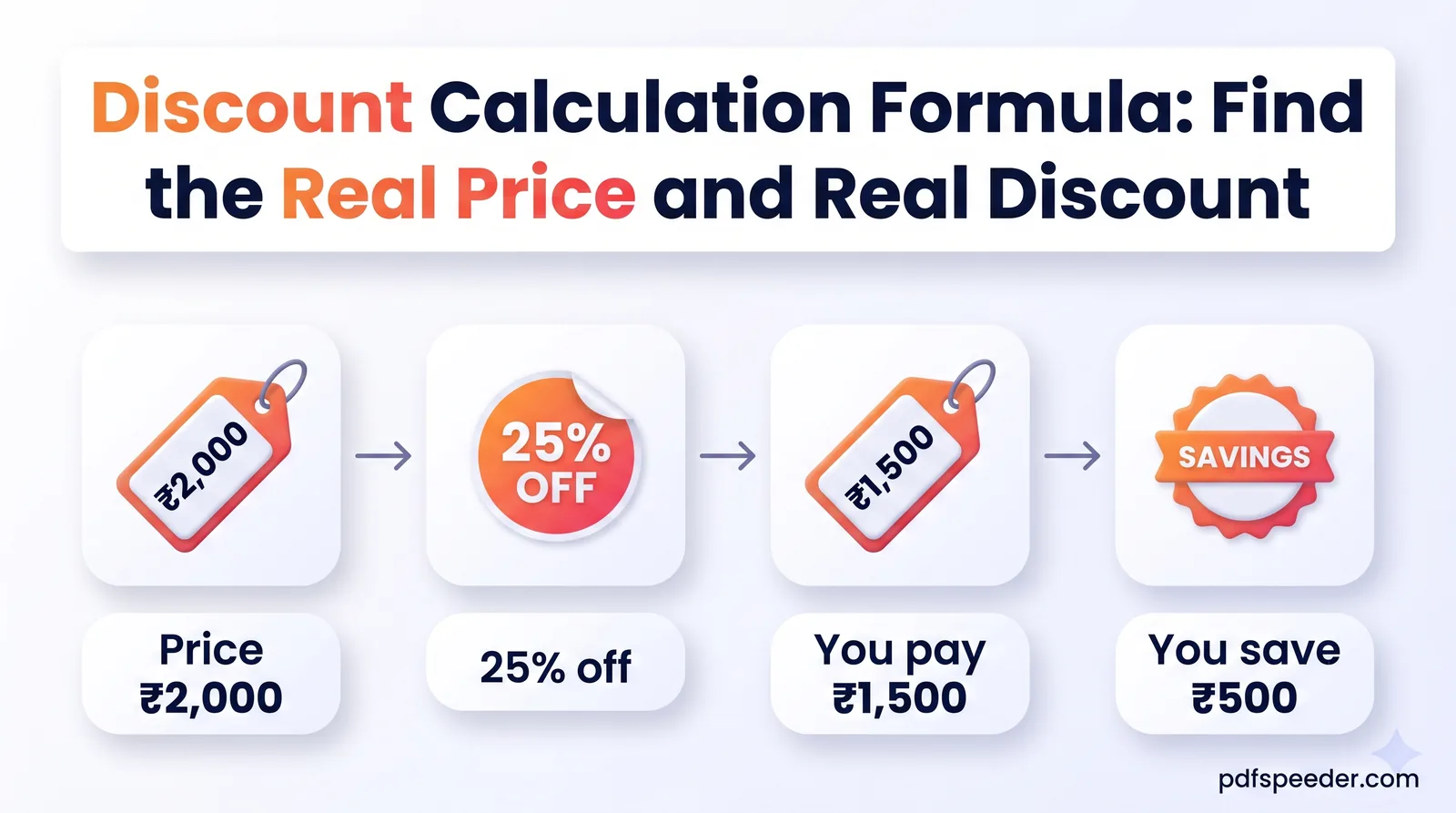
Discounts hit margin harder than they look. Take the ₹800 item again and give 10% off: the price drops to ₹720, profit falls from ₹160 to ₹80, and the margin from 20% to 11.11%. A 10% discount has halved your profit. Our Discount Calculator shows what customers actually pay after stacked offers, so you can test a promotion before you run it.
Our Margin Calculator does these sums as you type: fill in any two of cost, selling price, profit, margin and markup, and it works out the other three. If you enter a margin and a markup that contradict each other, it says so rather than quietly picking one.
Fees and GST: your real margin
The price a customer pays isn't all revenue. GST belongs to the government, and marketplaces take commission and shipping. Here's a product listed at ₹1,499 including 18% GST, costing you ₹600, sold on a marketplace that charges 12% commission on the price the customer pays and ₹70 for shipping:
| Amount | |
|---|---|
| Price the customer pays | ₹1,499.00 |
| GST at 18%, passed to the government | −₹228.66 |
| Your revenue | ₹1,270.34 |
| Cost of the product | −₹600.00 |
| Commission (12% of ₹1,499) | −₹179.88 |
| Shipping | −₹70.00 |
| Net profit | ₹420.46 |
That one sale can be described three ways:
- Margin on the tax-inclusive price: (1,499 − 600) ÷ 1,499 = 59.97%. It flatters you, because ₹228.66 of it is tax.
- Gross margin: (1,270.34 − 600) ÷ 1,270.34 = 52.77%. This counts only the cost of the goods.
- Net margin: 420.46 ÷ 1,270.34 = 33.10%. This is what you actually keep after fees.
On gross margin vs markup: the same ₹670.34 of gross profit is a 52.77% margin on revenue but a 111.72% markup on the ₹600 cost. In this example the break-even price, where net profit hits zero, is ₹921.02, and a 40% net margin needs a listing price of ₹1,724.69. The Margin Calculator's fees panel works out all of these, with the GST either included in the price or added on top.
A few points keep these numbers honest:
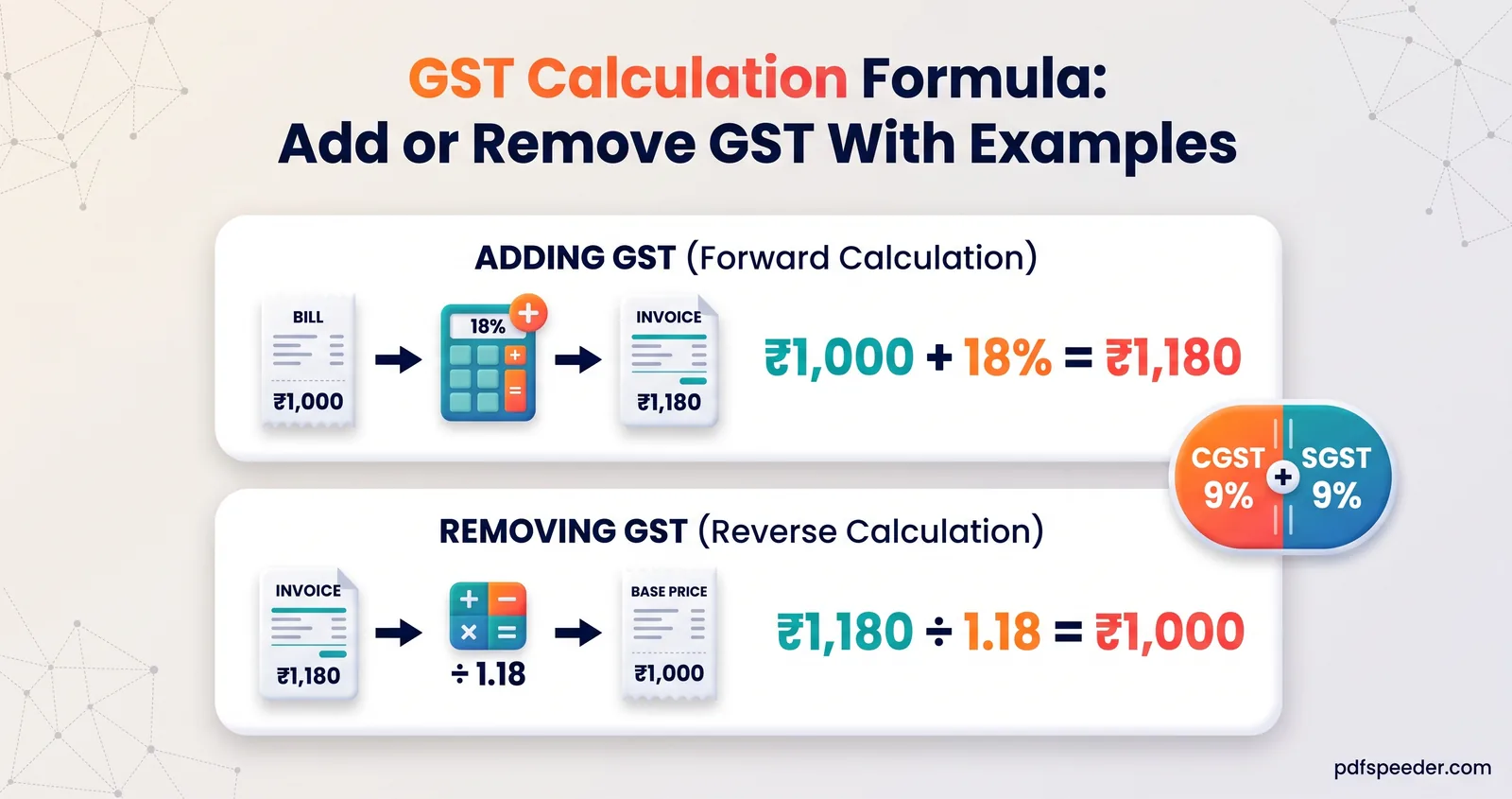
- GST rates are examples here. Since 22 September 2025, most goods and services fall under a 5% merit rate or an 18% standard rate, with a special 40% rate for a select few, according to the GST Council's announcement. Check the rate for your own product before you price it, and see our GST calculation formula guide for adding and removing it.
- Use costs without GST if you claim input tax credit. If you're GST-registered and claim back the GST on your purchases, your real cost is the price before tax.
- Read your marketplace's fee statement. Commission can be worked out on different bases, and fees can carry GST of their own, so put in the amounts you're actually charged.
One more trap: you can't average margins across products. Sell ten items at ₹100 with a 50% margin and one at ₹5,000 with a 20% margin, and the average of the two margins is 35%, but total profit ÷ total revenue is ₹1,500 ÷ ₹6,000 = 25%. The Margin Calculator's bulk mode works out the correctly blended figure across a whole price list, and the basics of percentages are in our guide on how to calculate percentage.
Ready to check your own prices? Put your cost and selling price into the Margin Calculator, open the fees panel, and see your net margin before you set the next price.
Frequently asked questions
What is the difference between margin and markup?
Margin is profit divided by the selling price; markup is profit divided by the cost. An item bought for ₹640 and sold for ₹800 has a 20% margin and a 25% markup.
How do I convert markup to margin?
Divide the markup by 1 plus the markup, using decimals. A 50% markup is 0.5 ÷ 1.5 = 0.3333, a 33.33% margin.
How do I calculate the selling price from a margin?
Divide the cost by 1 minus the margin. For a 30% margin on a ₹640 cost, that's 640 ÷ 0.70 = ₹914.29.
Is a 50% markup the same as a 50% margin?
No. A 50% markup gives a 33.33% margin, and a 50% margin needs a 100% markup, which means doubling your cost.
Should I include GST when I calculate my margin?
No. GST is collected for the government, so remove it from the price first: ₹1,499 including 18% GST is ₹1,270.34 of revenue.