How PPF Interest Is Calculated (and Why the 5th of the Month Matters)
How PPF interest is calculated on the lowest balance after the 5th, with worked numbers for April vs monthly deposits and a 15-year maturity at 7.1%.

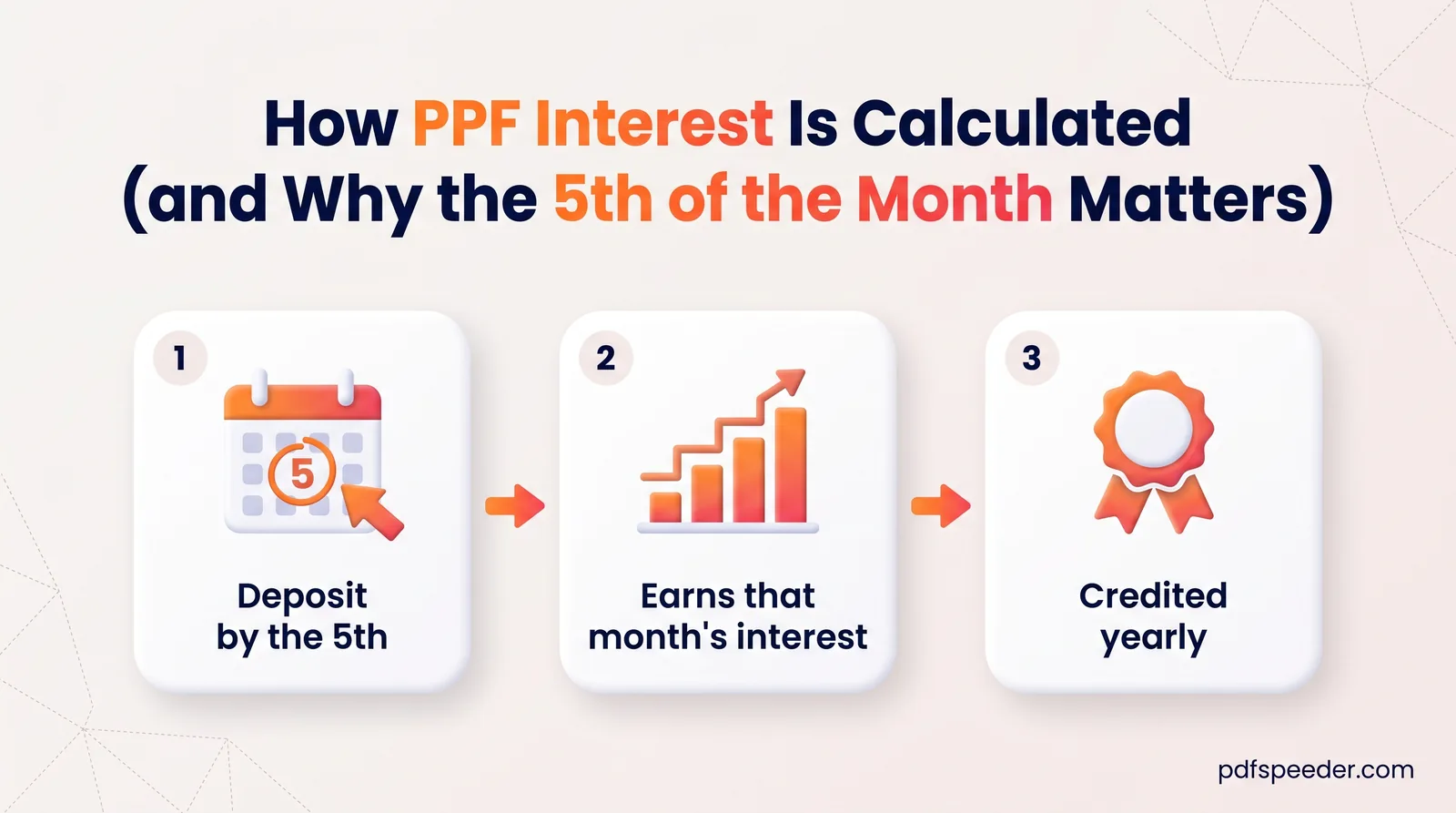
PPF interest is calculated every month on the lowest balance in your account between the close of the 5th and the last day of the month, at the annual rate divided by 12, and the year's twelve amounts are credited together at the end of March. Money that reaches the account by the 5th earns interest for that month; money that lands on the 6th waits until the next one. At 7.1%, the rate for October to December 2026, ₹1.5 lakh deposited on 4 April earns ₹10,650 in its first year, while the same deposit made on 6 April earns ₹9,762.50.
On this page
How PPF interest is calculated: the rule in one line
The rule comes from paragraph 7 of the Public Provident Fund Scheme, 2019: interest is earned "for a calendar month on the lowest balance at the credit of an account between the close of the fifth day and the end of the month", and it's credited at the end of each financial year. Written as a PPF calculation formula:
Interest for a month  = lowest balance from the close of the 5th to month-end × annual rate ÷ 12
Interest for the year = the sum of the 12 monthly amounts, credited on 31 March
"Close of the fifth day" means a deposit credited on the 5th itself still counts for that month. The rate is set by the government, which reviews small savings rates every quarter. The Ministry of Finance's office memorandum of 30 September 2026 left every rate unchanged for October to December 2026, so the PPF interest rate stays at 7.1% a year, or 0.5917% a month. If the rate changes partway through a year, each month's interest uses the rate for that quarter.
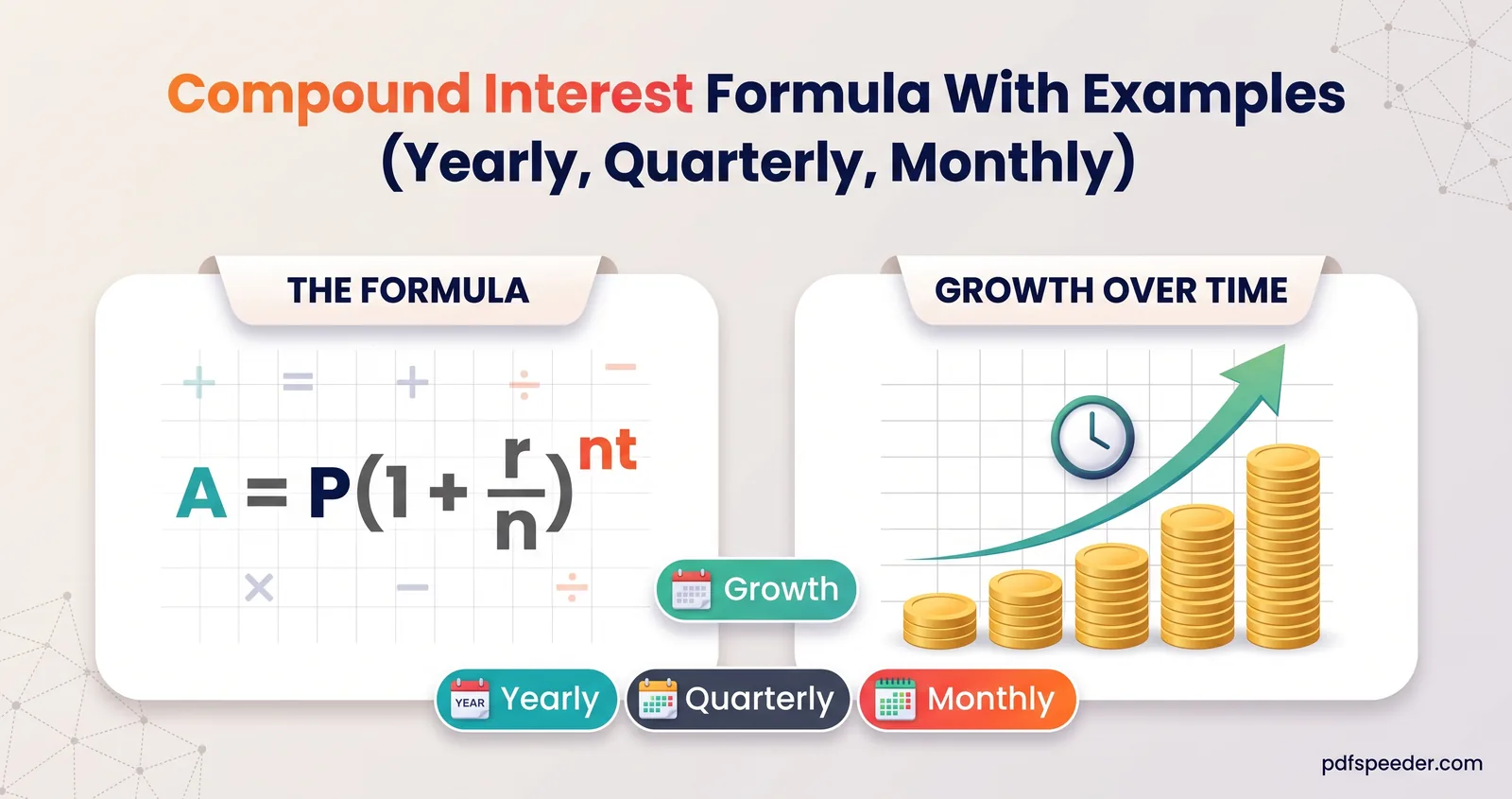
Because interest is added only once a year, PPF compounds yearly, not monthly. The twelve monthly amounts simply add up, and next year's interest is worked out on a balance that includes this year's.
Working out the monthly interest
Here's a three-month stretch of an account that holds ₹2,00,000 on 1 April:
| Month | Balance on the 1st | Deposit | Lowest balance, 5th to month-end | Interest at 7.1% |
|---|---|---|---|---|
| April | ₹2,00,000 | ₹50,000 on 3 April | ₹2,50,000 | ₹1,479.17 |
| May | ₹2,50,000 | ₹50,000 on 12 May | ₹2,50,000 | ₹1,479.17 |
| June | ₹3,00,000 | None | ₹3,00,000 | ₹1,775.00 |
April's deposit arrived before the cut-off, so it counted straight away. May's arrived on the 12th, so the lowest balance after the 5th was still ₹2,50,000 and the new ₹50,000 earned nothing in May; it starts counting in June. Each figure is the lowest balance × 7.1 ÷ 1200, for example 2,50,000 × 7.1 ÷ 1200 = ₹1,479.17. None of it appears in your passbook until 31 March, when the year's total is credited in one entry.
Example: depositing before vs after the 5th
Take a ₹1,50,000 deposit, the yearly maximum, made in April at 7.1%:
- On 4 April: it counts for all 12 months, so it earns 1,50,000 × 7.1% = ₹10,650 by 31 March.
- On 6 April: it misses April and counts for 11 months, earning 1,50,000 × 7.1 ÷ 1200 × 11 = ₹9,762.50.
Two days cost ₹887.50, exactly one month's interest. Make the late deposit every year for 15 years and the maturity value comes out ₹22,474 lower, because each year's missing interest also never earns interest of its own.
The costlier habit is the tax-season deposit, paid in late March while you gather tax-saving proofs. A deposit made after 5 March earns nothing in the year it's made, so it effectively starts a year late, and doing that every year leaves the account about ₹2.7 lakh short after 15 years: a whole year's growth.
If March is when the money is free, get it in by 5 March. It then earns one month, or ₹887.50 on ₹1.5 lakh.
Tip: Treat the 3rd or 4th as your real deadline. What counts is the balance at the credit of the account, so a bank holiday or a transfer credited a day late can push your deposit past the cut-off.
Lumpsum in April or monthly deposits?
You can pay into PPF in one lump sum or in as many instalments as you like, as long as the year's total is between ₹500 and ₹1,50,000, in multiples of ₹50. The ₹1.5 lakh cap includes any account you run for a minor. Here's ₹1.5 lakh a year for 15 years at 7.1%, paid five different ways:
| How you deposit ₹1.5 lakh a year | First year's interest | Value after 15 years | Less than the best option |
|---|---|---|---|
| Lump sum by 5 April | ₹10,650 | ₹40,68,209 | Best |
| Lump sum on 6 April | ₹9,763 | ₹40,45,735 | ₹22,474 |
| ₹12,500 by the 5th of every month | ₹5,769 | ₹39,44,599 | ₹1,23,610 |
| ₹12,500 after the 5th of every month | ₹4,881 | ₹39,22,125 | ₹1,46,084 |
| Lump sum in late March | ₹0 | ₹37,98,515 | ₹2,69,694 |
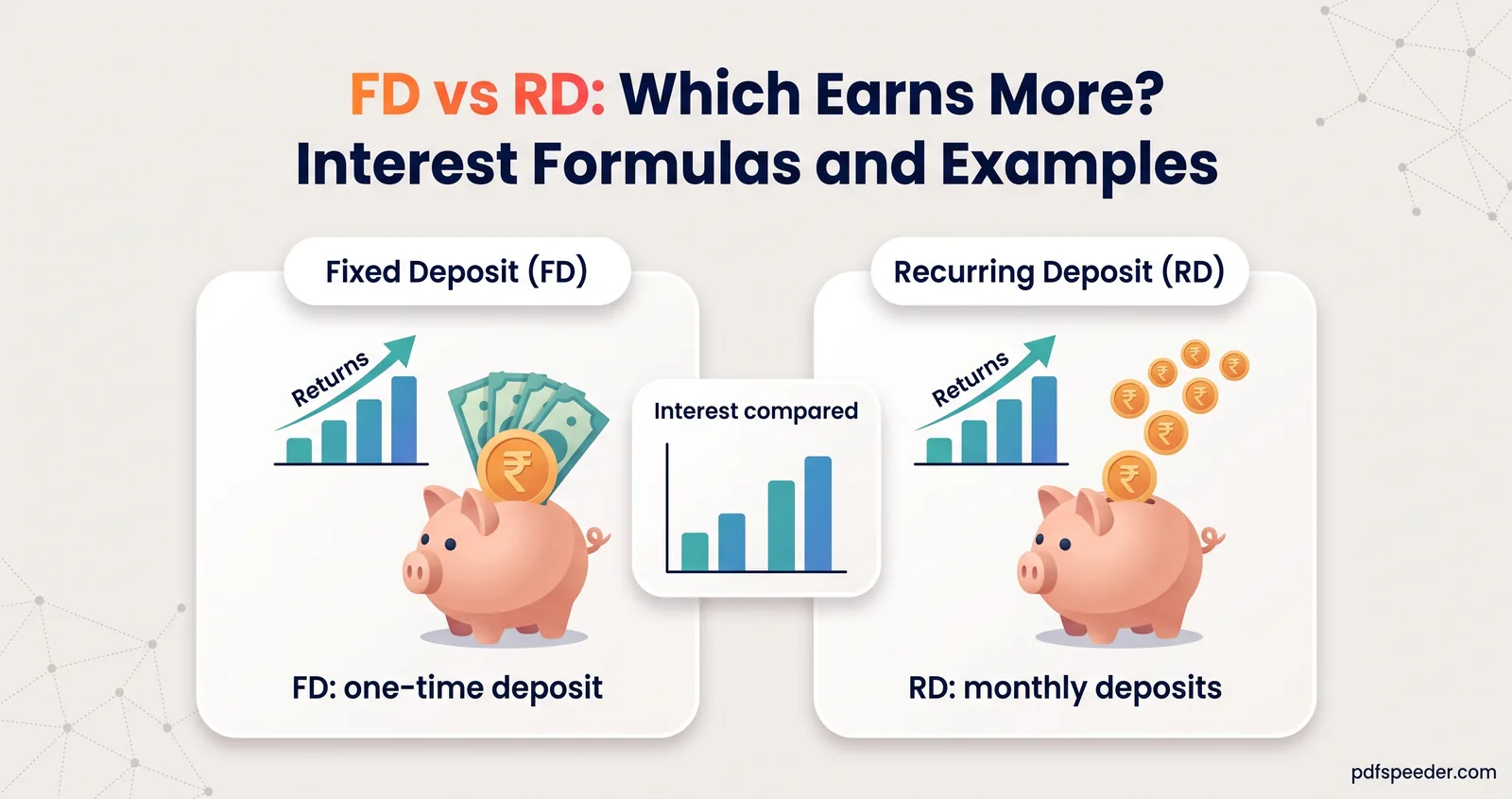
Monthly deposits earn less because the money arrives gradually: across a year, each instalment sits in the account for 6.5 months on average, against 12 for an April lump sum. It's the same effect our FD vs RD comparison shows for bank deposits.
That doesn't make monthly deposits a mistake. If your PPF money comes out of your salary, ₹12,500 by the 5th of each month is the natural way to pay, and it beats paying on the 10th by ₹22,474 over 15 years. Or put in whatever you can spare by 5 April, then top up monthly, each time before the 5th.
A 15-year PPF maturity calculation
For equal deposits made at the start of every year, the PPF maturity calculation fits on one line:
Maturity = D × [(1 + r)^n − 1] ÷ r × (1 + r)

D = yearly deposit, r = annual rate as a decimal, n = number of years
1,50,000 × (1.071^15 − 1) ÷ 0.071 × 1.071 = ₹40,68,209
The final × (1 + r) is there because each deposit earns a full year's interest in the year it's made. Year by year, each row adds the ₹1,50,000 deposit and that year's interest to the opening balance (figures rounded to the rupee):
| Year | Opening balance | Interest credited on 31 March | Closing balance |
|---|---|---|---|
| 1 | ₹0 | ₹10,650 | ₹1,60,650 |
| 2 | ₹1,60,650 | ₹22,056 | ₹3,32,706 |
| 3 | ₹3,32,706 | ₹34,272 | ₹5,16,978 |
| 5 | ₹7,14,334 | ₹61,368 | ₹9,25,701 |
| 10 | ₹19,32,282 | ₹1,47,842 | ₹22,30,124 |
| 15 | ₹36,48,515 | ₹2,69,695 | ₹40,68,209 |
You deposit ₹22,50,000 in all and earn ₹18,18,209 of interest, 45% of the maturity value. In the final year, the interest credited is bigger than the maximum you're allowed to deposit. That's yearly compounding at work, and our guide to the compound interest formula explains why the curve steepens.
To check it, open our PPF Calculator, move the annual investment to ₹1,50,000 (it opens at ₹1,00,000) and keep the rate at 7.1% and the tenure at 15 years. It shows the same ₹40,68,209 with a year-wise table, and it runs in your browser. It assumes one deposit a year, made by 5 April, so use the tables above for monthly or late deposits.
Why your account may run 16 years, not 15. A PPF account matures 15 years after the end of the financial year in which you opened it. Open one in April 2026 and it can be closed from 1 April 2042, which leaves room for 16 yearly deposits; at 7.1% they'd grow to ₹45,17,702. Open it in March instead and that short opening year counts as a full one, so the account matures almost a year sooner.
The rate won't stay fixed for 15 years, of course. At 6.5% throughout, the same deposits would reach ₹38,63,102; at 8%, ₹43,98,642.
Extensions, withdrawals and loans
The scheme lets you reach your money before maturity, within limits, and keep the account going afterwards. Here's what that means for the ₹1.5 lakh-a-year example, counting the opening year as year 1:
| Facility | When | How much |
|---|---|---|
| Loan | 3rd to 6th financial year | Up to 25% of the balance at the end of the second year before the year you apply: ₹40,162 in year 3 |
| Partial withdrawal | Once a year, from the 7th financial year | Up to 50% of the lower of two balances, at the end of the 4th preceding year and of last year: ₹2,58,489 in year 7 |
| Premature closure | From the 7th year, only for life-threatening illness, higher education or a change in residency status | The whole balance, with all interest recalculated at 1% less: ₹11,12,921 instead of ₹11,52,076 at the start of year 7 |
| Extension with deposits | Apply in Form 4 within a year of maturity | Further 5-year blocks; withdrawals of up to 60% of the balance at the start of each block |
| Extension without deposits | What happens if you don't apply | The balance keeps earning interest; one withdrawal a year, of any amount |
Repay a loan's principal within 36 months and you then owe interest of just 1% a year for the time it was outstanding; miss that deadline and the rate becomes 6% a year. You can't take a fresh loan while one is outstanding, and any loan must be cleared before a partial withdrawal.
Extensions are where PPF quietly keeps compounding. Leave the ₹40,68,209 in the account for five more years without deposits and, at 7.1%, it becomes ₹57,32,587. Keep paying ₹1.5 lakh by every 5 April as well and it becomes ₹66,58,288; set the PPF Calculator's tenure to 20 years to see that figure. For the no-deposit case, the Compound Interest Calculator on annual compounding gets close, though its principal slider moves in ₹10,000 steps.
Warning: Once an account has run without deposits for more than a year after maturity, you can't switch back to making deposits. If you might want to keep investing, submit Form 4 in the first year after maturity.
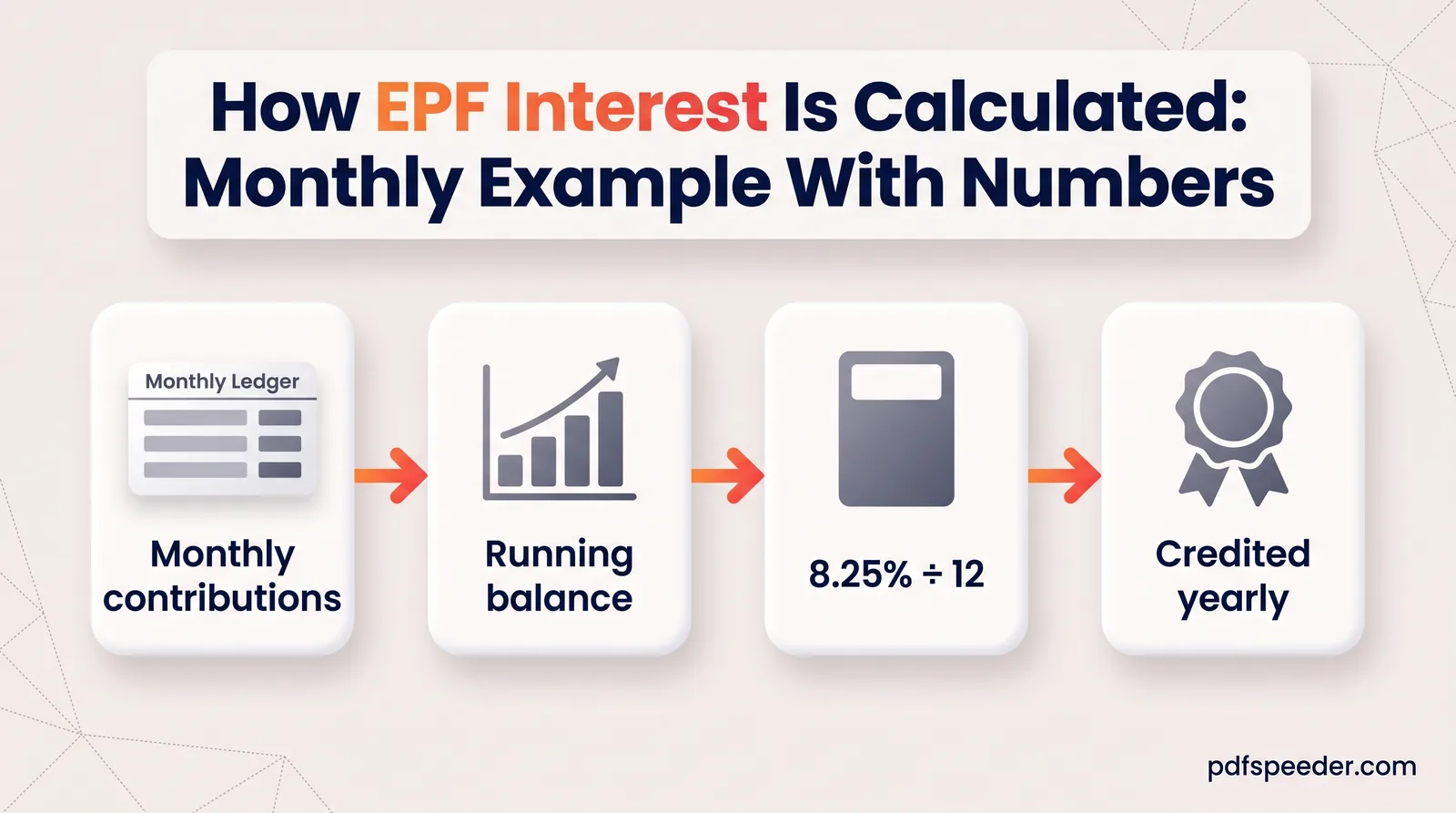
On tax: under the old regime, PPF deposits count towards the ₹1.5 lakh yearly deduction in Section 123 of the Income-tax Act, 2025, which replaced Section 80C from 1 April 2026; the default new regime doesn't allow it. The interest is tax-free. Budgets change these rules, so check the Income Tax Department's guidance for the year you file. EPF also works out interest month by month and credits it once a year, with its own rules about when contributions start counting; our guide to how EPF interest is calculated covers them.
Note: This article is for information only and is not financial advice. The 7.1% rate is the one notified for October to December 2026; your passbook and the post office or bank that holds your account are the final word.
Next step: open last year's passbook, check the dates your deposits were credited, and if any landed after the 5th, set this year's transfer for the 1st to the 4th of the month.
Frequently asked questions
Is PPF interest calculated monthly or yearly?
Both, in a sense. It's worked out every month on the lowest balance between the close of the 5th and the month-end, but credited only once a year, on 31 March, so it compounds yearly.
What happens if I deposit in PPF after the 5th?
The new money earns nothing for that month and starts counting from the next one. ₹1.5 lakh deposited on 6 April earns ₹9,762.50 in its first year at 7.1%, against ₹10,650 if it arrives by the 5th.
What is the PPF interest rate now?
7.1% a year for October to December 2026, unchanged under the Ministry of Finance's memorandum of 30 September 2026. The rate is reviewed every quarter.
Is it better to invest in PPF monthly or yearly?
A lump sum by 5 April earns the most. ₹12,500 by the 5th of every month ends ₹1,23,610 lower after 15 years at 7.1%, but it's a perfectly good choice if that's how your money comes in.
How much will ₹1.5 lakh a year in PPF give after 15 years?
₹40,68,209 at 7.1%, if every deposit reaches the account by 5 April: ₹22,50,000 of deposits plus ₹18,18,209 of interest. A lower or higher rate changes the result, and the rate is revised quarterly.
Can I extend my PPF account after 15 years?
Yes. Apply in Form 4 within a year of maturity to continue with deposits in 5-year blocks, or simply leave the account running without deposits, earning interest, for as long as you like.