Home Loan Prepayment: Reduce EMI or Tenure? The Maths Explained
Home loan prepayment: reduce EMI or tenure? See worked numbers on a ₹40 lakh loan, the prepay-or-invest maths and the RBI rules on prepayment charges.

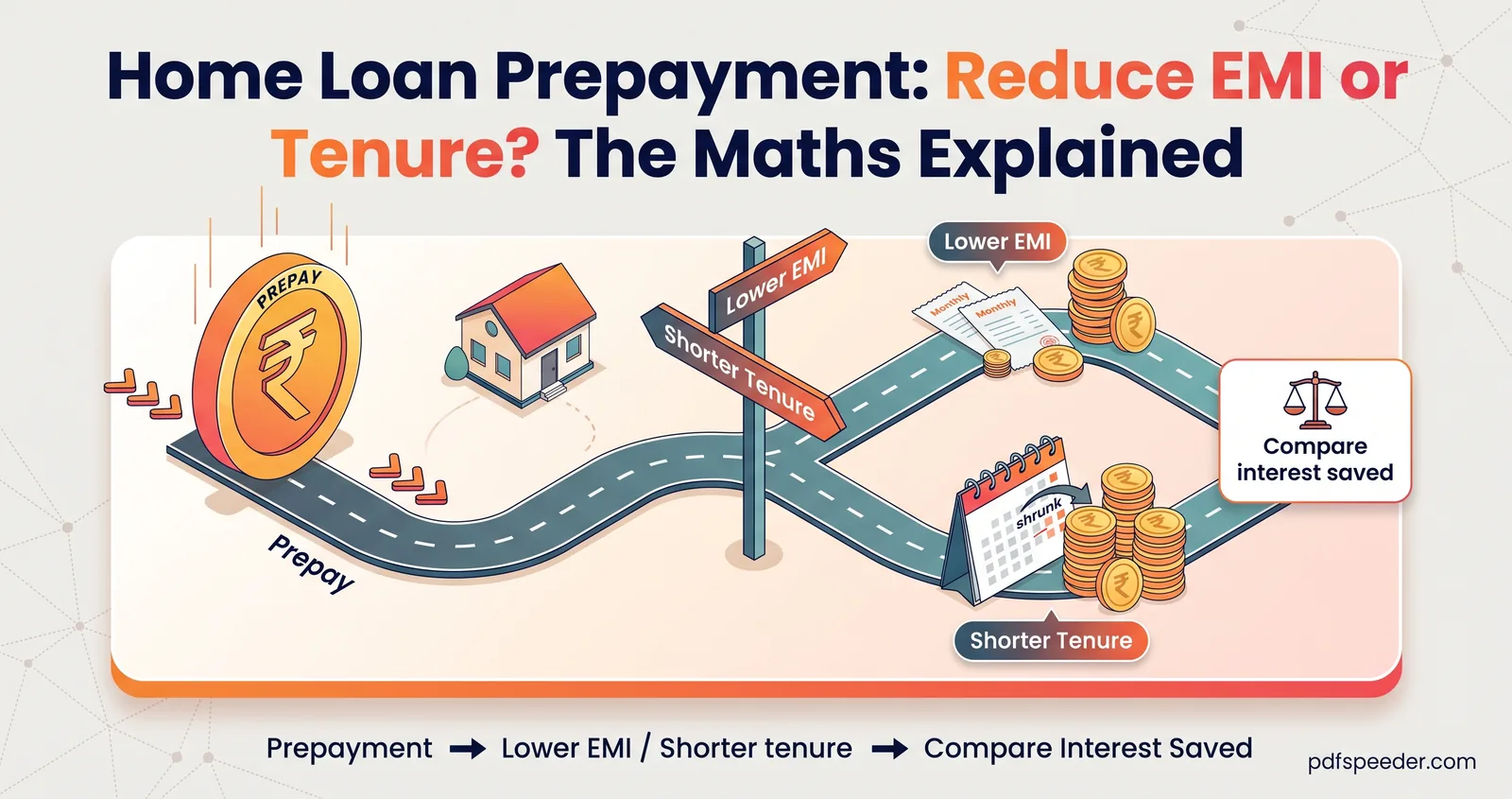
After a home loan prepayment, reducing the tenure almost always saves more interest than reducing the EMI. On an example ₹40 lakh loan at 8% over 20 years, a ₹2 lakh part payment made two years in saves ₹5,79,339 of interest and 23 EMIs if you keep paying the same EMI, but only ₹1,77,984 if you keep the tenure and cut the EMI by ₹1,750. Pick the lower EMI when your monthly budget genuinely needs the room; otherwise, let the loan end sooner.
On this page
Home loan prepayment: reduce EMI or tenure? The short answer
Here's the whole example in one table. Everything below explains where these numbers come from and when the second row is the better choice anyway.
| Option after a ₹2 lakh part payment | Monthly EMI | EMIs in total | Total interest | Interest saved |
|---|---|---|---|---|
| No prepayment | ₹33,458 | 240 | ₹40,29,825 | None |
| Keep the EMI, cut the tenure | ₹33,458 | 217 | ₹34,50,486 | ₹5,79,339 |
| Keep the tenure, cut the EMI | ₹31,708 | 240 | ₹38,51,841 | ₹1,77,984 |
Cutting the tenure saves more than three times as much here. Cutting the EMI still saves money, and it leaves you ₹1,750 a month better off from the next EMI onwards.
Worked example: a ₹2 lakh part payment
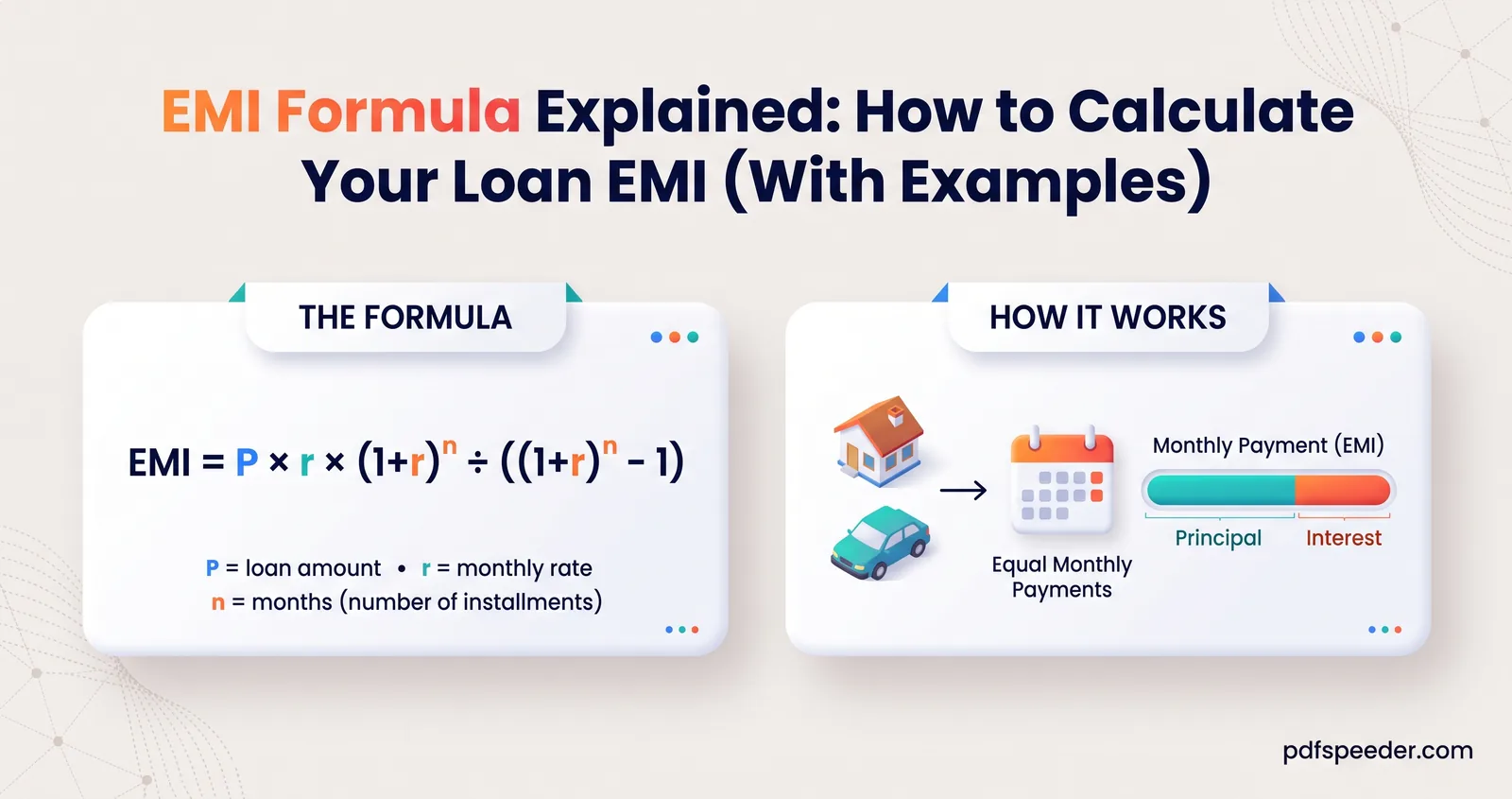
The loan is ₹40,00,000 at an example rate of 8% a year for 20 years (240 EMIs). Using the standard formula, EMI = P × r × (1 + r)^n ÷ [(1 + r)^n − 1] with r = 0.08 ÷ 12 and n = 240, the EMI comes to ₹33,458. If you'd like the formula worked step by step, our guide to how EMIs are calculated does exactly that.
Two years in, after 24 EMIs, here's where you stand:
- You've paid ₹8,02,982 in EMIs.
- ₹6,26,872 of that was interest, and only ₹1,76,111 reduced the loan.
- You still owe ₹38,23,889.
Now you pay an extra ₹2,00,000, which brings the balance down to ₹36,23,889. Your lender will then either keep the EMI and shorten the loan, or keep the end date and lower the EMI. All the figures in this article were worked out month by month on the outstanding balance and rounded to the rupee; your lender's schedule may differ by a few rupees.
Option A: keep the EMI, cut the tenure
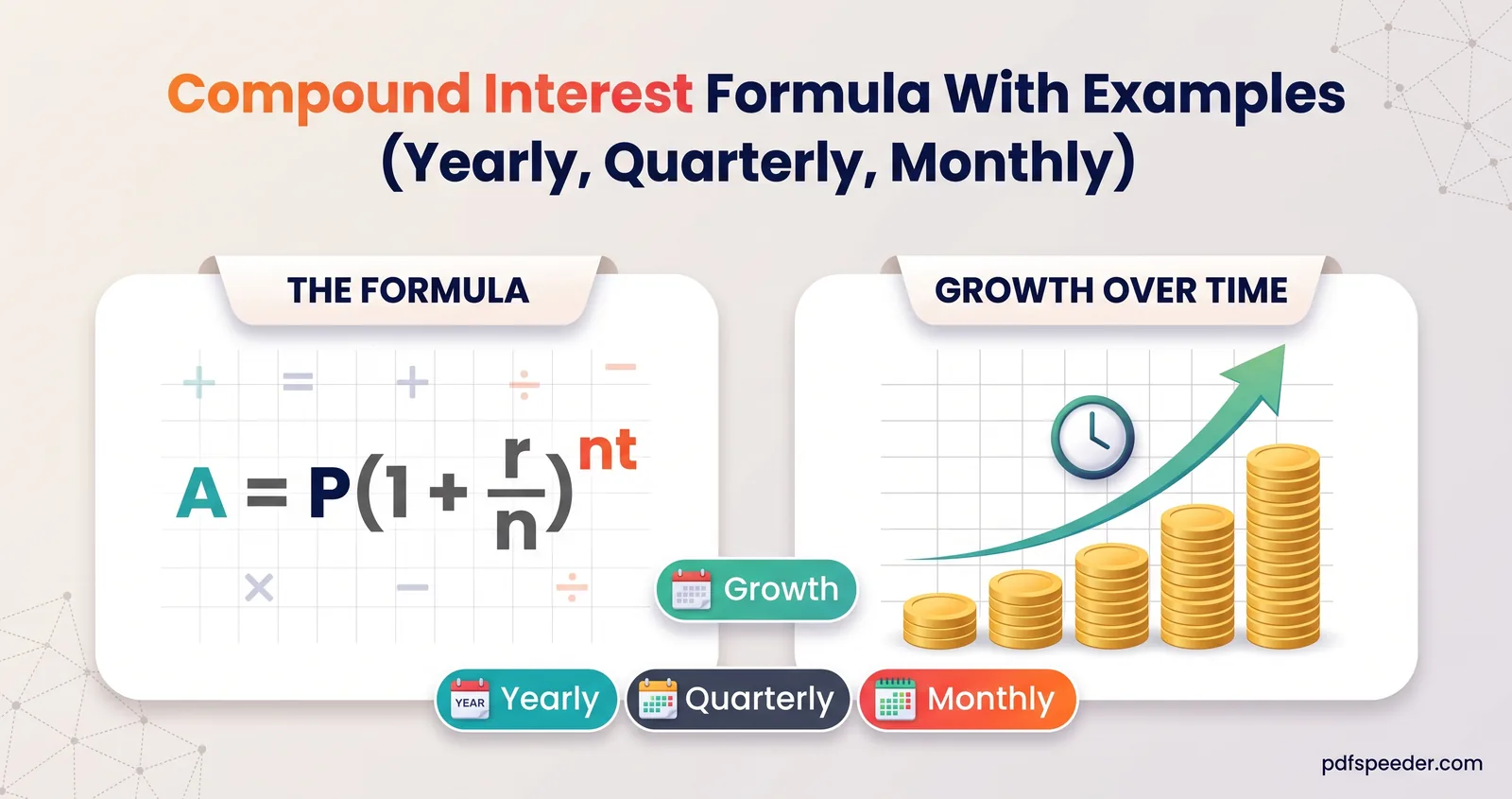
You carry on paying ₹33,458 a month, but now against a balance that's ₹2 lakh smaller. Less of each EMI goes on interest, more goes on the loan, and the gap compounds in your favour every month: the same maths as compound interest, working for you this time.
The result: the loan ends in month 217 instead of month 240, with a smaller final payment of ₹23,643. Total interest drops from ₹40,29,825 to ₹34,50,486, a saving of ₹5,79,339. Each rupee you prepaid saved about ₹2.90 of interest.
Timing matters as much as the option you choose. Here is the same ₹2 lakh, paid at different points in the loan:
| ₹2 lakh prepaid after | Interest saved (keep EMI) | EMIs saved | Interest saved (keep tenure) | New EMI (keep tenure) |
|---|---|---|---|---|
| 1 year | ₹6,38,930 | 25 | ₹1,89,653 | ₹31,749 |
| 2 years | ₹5,79,339 | 23 | ₹1,77,984 | ₹31,708 |
| 5 years | ₹4,23,333 | 18 | ₹1,44,035 | ₹31,546 |
| 10 years | ₹2,26,776 | 12 | ₹91,186 | ₹31,031 |
| 15 years | ₹90,398 | 8 | ₹43,317 | ₹29,402 |
The earlier you prepay, the more you save, because principal you clear early would otherwise have attracted interest for many more years. Made after one year, the ₹2 lakh saves seven times as much as it does after fifteen.
Option B: keep the tenure, cut the EMI
Here the lender recalculates your EMI on the new balance of ₹36,23,889 over the 216 months that are left. It falls to ₹31,708, which is ₹1,750 less than before, and total interest comes to ₹38,51,841: a saving of ₹1,77,984.
It saves less because you're still borrowing for the full 18 years that remain, and you're repaying principal more slowly each month. Even so, a lower EMI is the smarter call when:
- Your income is uncertain. A smaller fixed outgoing is a buffer if you change jobs, rely on one salary or have variable pay.
- Your EMI recently went up. If a rate rise pushed the EMI to an uncomfortable level, a prepayment can bring it back down.
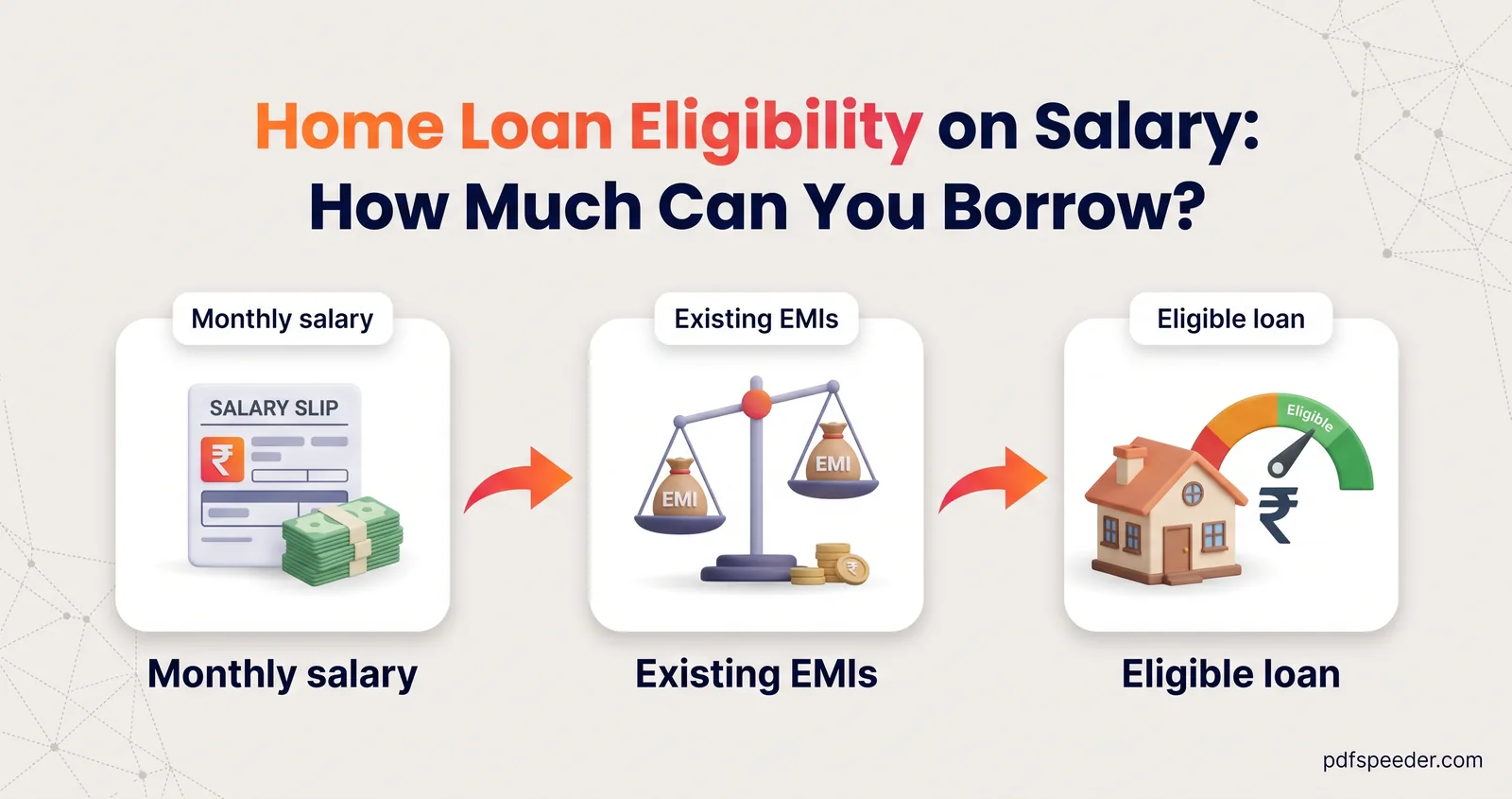
- You'll need another loan soon. Lenders look at your existing EMIs when deciding how much more you can borrow, so a lower EMI can help.
- You'll invest the difference. If you put the ₹1,750 into an investment every month and it earns as much as your loan rate, you end up about where Option A would have left you. The catch is keeping it up for 18 years.
Prepay or invest the money instead?
Prepaying gives you a guaranteed return equal to your loan's interest rate, 8% in this example, because that's the interest you no longer pay. Investing might earn more or less. To compare fairly, follow both routes to the loan's original end date, month 240:
- Prepay route: pay the ₹2 lakh now (Option A); once the loan ends in month 217, invest the full ₹33,458 every month until month 240.
- Invest route: invest the ₹2 lakh now and leave the loan as it is.
| Assumed steady return on the investment | Prepay route: wealth at month 240 | Invest route: wealth at month 240 | Ahead |
|---|---|---|---|
| 6% | ₹8,24,375 | ₹5,87,353 | Prepaying, by ₹2,37,022 |
| 8% | ₹8,40,115 | ₹8,40,115 | Neither |
| 10% | ₹8,56,235 | ₹12,00,939 | Investing, by ₹3,44,704 |
| 12% | ₹8,72,744 | ₹17,15,721 | Investing, by ₹8,42,978 |
The break-even point is your loan rate. Investing comes out ahead only if it earns more than the loan rate after tax and costs, and the table assumes steady returns that real markets don't deliver. Prepaying, by contrast, can't fall in value. Tax benefits on home loan interest and principal can shift the comparison too, so check the current rules with a tax adviser.
If you're asking yourself "should I prepay my home loan?", a sensible order is: keep an emergency fund of several months' expenses, clear any costlier debt first, then decide how much to prepay and how much to invest. Splitting the money between the two is a perfectly reasonable answer.
Charges, timing and paperwork
Prepayment and foreclosure charges
Under the RBI's Pre-payment Charges on Loans Directions, 2025, banks, co-operative banks and NBFCs (which include housing finance companies) can't charge pre-payment charges on floating-rate loans taken by individuals for purposes other than business. That holds for part payments and full closure alike, whatever the source of the money and without any lock-in period. The Directions cover loans sanctioned or renewed from 1 January 2026, and older floating-rate home loans were already covered by earlier RBI instructions against foreclosure charges.
Fixed-rate loans are different: any charges follow the lender's policy and must be disclosed in the sanction letter, the loan agreement and the Key Facts Statement. For a dual-rate loan, what matters is whether it's on a floating rate when you prepay. Check your own papers before you pay, especially for home loan foreclosure charges on an older fixed-rate loan.
Paperwork checklist
- Tell the lender in writing whether you want the tenure or the EMI reduced. Lenders handle this differently, so don't leave it to a default.
- Pay through the lender's portal or branch, and keep the receipt.
- Ask for a revised repayment schedule and check the new EMI or end date against your own numbers.
- If you're closing the loan fully, collect the closure letter and your original property documents. RBI's rules on releasing property documents give lenders 30 days after full repayment, with compensation of ₹5,000 a day if a delay is their fault.
Check your numbers
Our calculators don't model part payments, but you can check Option B in seconds. In the EMI Calculator, enter the balance after your prepayment (₹36,23,889 here), your rate and the years left (18), and it shows the new EMI of ₹31,708. The Home Loan EMI Calculator does the same for any home loan, with a year-by-year schedule. If you're weighing a switch to a lower rate rather than a prepayment, the Refinance Calculator compares your current loan with a new one side by side.
Note: This article is for information only and is not financial advice. The rate and loan in the example are illustrations; your loan agreement and your lender's schedule are what count.
Your next step: find your current outstanding balance on your latest loan statement, then run it through the EMI Calculator with and without the amount you plan to prepay.
Frequently asked questions
Is it better to reduce the EMI or the tenure after a prepayment?
Reducing the tenure saves more interest. In the ₹40 lakh example, it saves ₹5,79,339 against ₹1,77,984 for a lower EMI, so choose the lower EMI only if you need the monthly room.
Should I prepay my home loan or invest the money?
Prepaying earns a guaranteed return equal to your loan rate, while investing only wins if it earns more than that after tax, with no guarantee. Once you have an emergency fund, splitting the money between the two is a reasonable middle course.
Are there charges for prepaying a home loan?
For floating-rate loans taken by individuals for non-business purposes, RBI rules bar pre-payment charges, for part or full payment. Fixed-rate loans can carry charges under the lender's policy, which must be disclosed in your loan documents.
When is the best time to prepay a home loan?
As early as you can. The same ₹2 lakh saves ₹6,38,930 of interest when prepaid after one year, but only ₹90,398 after fifteen years, if you keep the EMI unchanged.
Does a part payment reduce my EMI automatically?
Not necessarily. Lenders may shorten the tenure or lower the EMI, so state your choice in writing when you pay and ask for the revised schedule.