Home Loan Eligibility on Salary: How Much Can You Borrow?
Home loan eligibility on salary, worked out: the FOIR formula lenders use, examples for ₹30,000, ₹50,000 and ₹1 lakh a month, and the ways to borrow more.

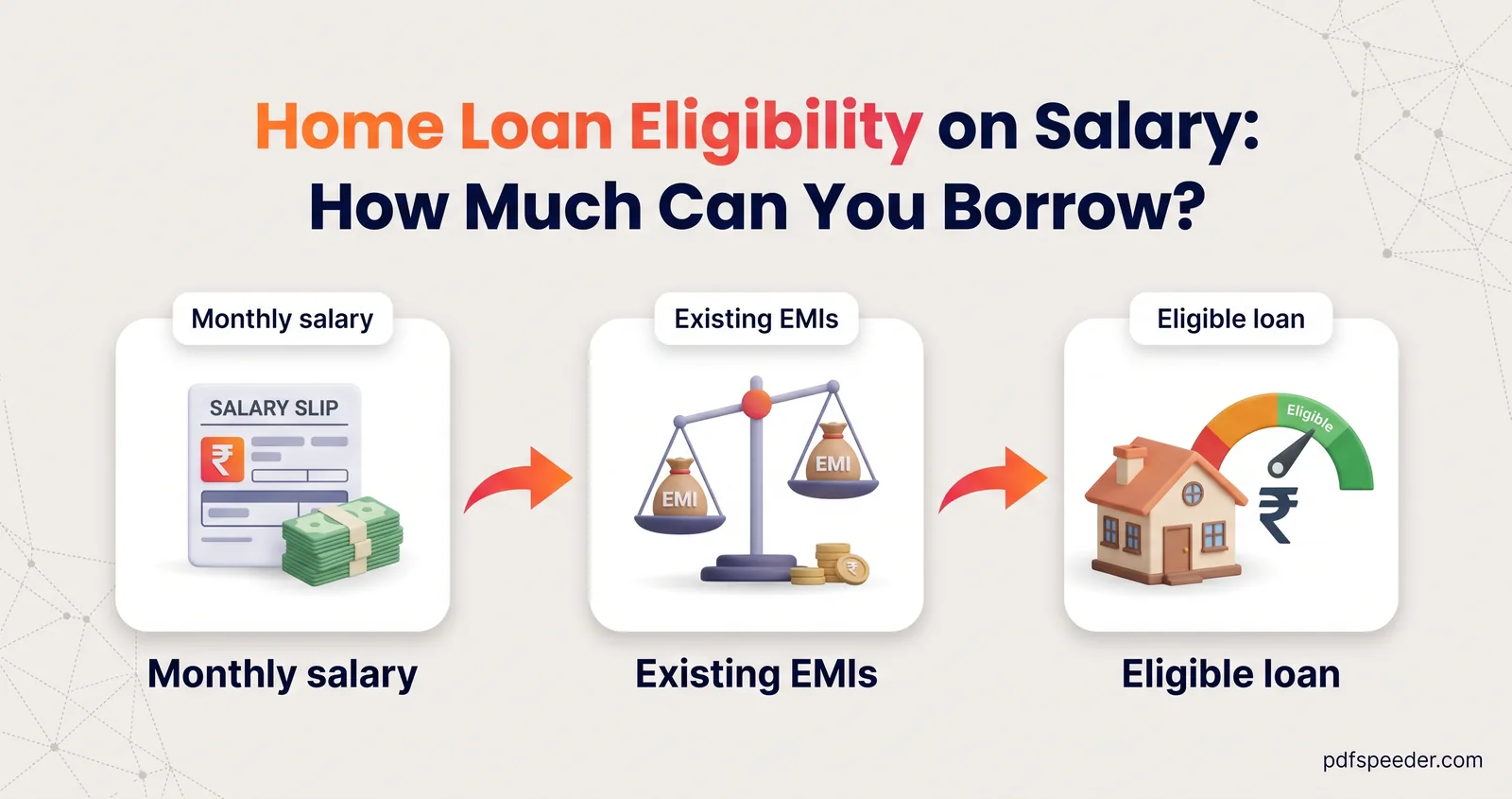
Your home loan eligibility on salary is, roughly, the largest loan whose EMI fits inside the share of your monthly income a lender allows for all your EMIs, a limit called FOIR. With an example FOIR of 50%, an 8% interest rate and a 20-year tenure, a ₹50,000 monthly take-home salary supports an EMI of ₹25,000 and a loan of about ₹29.9 lakh. Every ₹1,000 of EMI you already pay knocks roughly ₹1.2 lakh off that figure, and the value of the property sets a second ceiling.
On this page
How banks work out your home loan eligibility on salary
Two separate limits decide how much you can borrow, and you get whichever is lower.
Your income, through FOIR. FOIR stands for fixed obligations to income ratio: all your monthly EMIs, old and new, divided by your monthly income. Each lender sets its own limit in its credit policy. Figures between 40% and 60% are commonly quoted, so treat any FOIR in this article as an example, not your bank's rule.
The property's value, through LTV. The loan-to-value ratio caps the loan as a share of the property's value. For banks, RBI's Credit Facilities Directions (paragraphs 111 and 113) set these ceilings for individual housing loans:
| Loan amount | Maximum loan as a share of the property's value |
|---|---|
| Up to ₹30 lakh | 90% |
| Above ₹30 lakh, up to ₹75 lakh | 80% |
| Above ₹75 lakh | 75% |
Stamp duty, registration and other documentation charges don't count towards the property's cost for this purpose, except for homes costing up to ₹10 lakh, so budget for them on top of your down payment.
Beyond those two limits, lenders look at your credit history, the stability of your job and your age. The age check matters because lenders usually want the loan repaid by an age their policy sets, which can force a shorter tenure on older applicants and, as you'll see below, a smaller loan.
The loan eligibility formula: from salary to loan amount
The calculation runs in two steps. First the EMI you can afford, then the loan that EMI can repay:
Affordable EMI = Monthly income × FOIR − Existing EMIs
Loan amount    = Affordable EMI × [(1 + r)^n − 1] ÷ [r × (1 + r)^n]

r = annual interest rate ÷ 12 ÷ 100
n = tenure in months
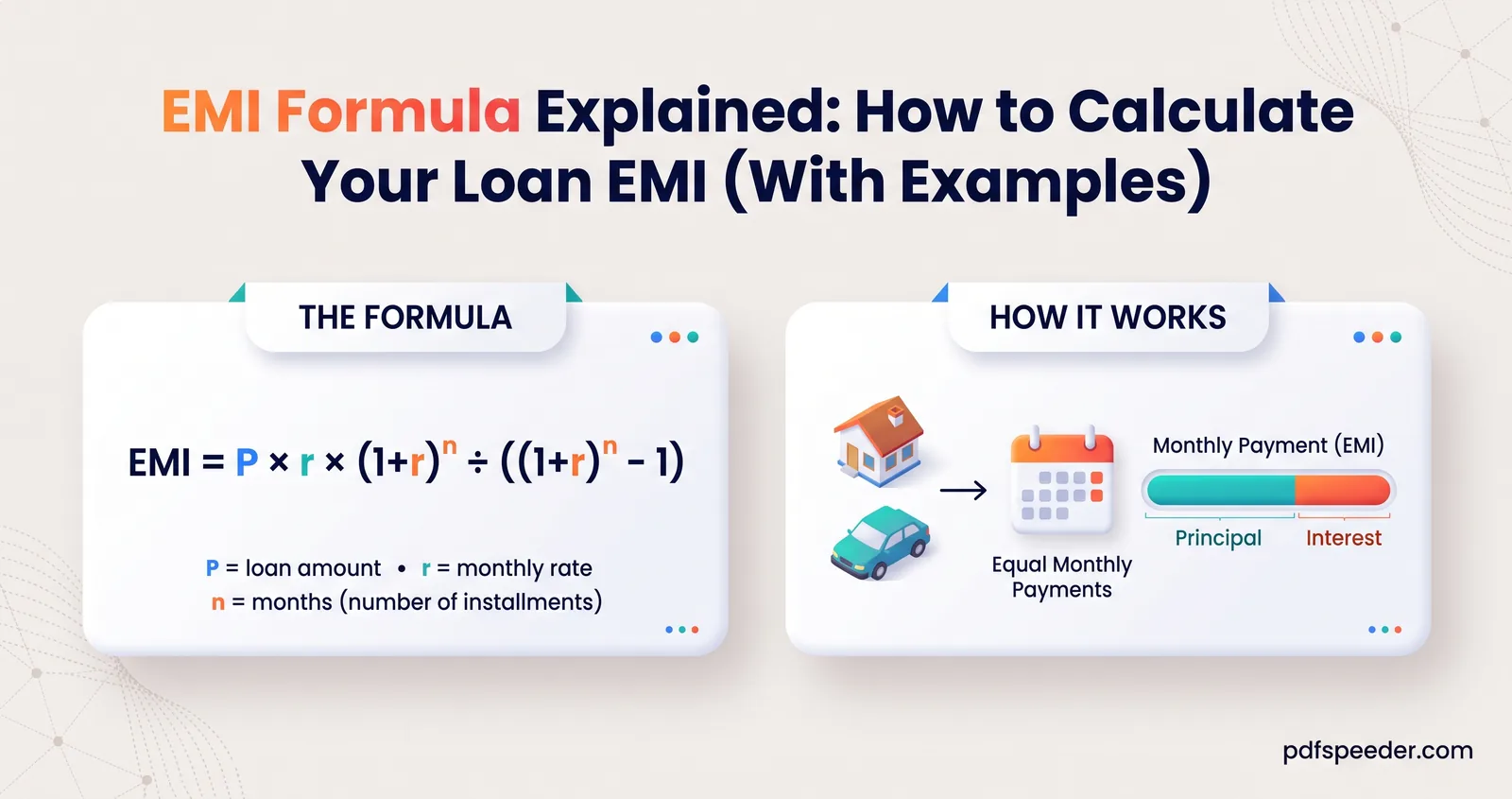
The second line is the standard EMI formula turned around to solve for the principal; our guide to the EMI calculation formula explains how it works. Here it is for a ₹50,000 monthly salary with no other loans, at an example 50% FOIR, 8% a year and 20 years:
- Affordable EMI: 50,000 × 0.50 − 0 = ₹25,000
- Monthly rate: r = 8 ÷ 12 ÷ 100 = 0.0066667, and n = 20 × 12 = 240
- Growth factor: (1 + r)^n = 1.0066667^240 = 4.926803
- Loan factor: (4.926803 − 1) ÷ (0.0066667 × 4.926803) = 119.5543
- Loan amount: 25,000 × 119.5543 = ₹29,88,857
That loan factor is a handy shortcut: at 8% over 20 years, every ₹1,000 of monthly EMI supports ₹1,19,554 of loan. Combined with a 50% FOIR, it means a loan of about 60 times your monthly income. Rules of thumb that quote eligibility as a multiple of salary come from exactly this sum, which is why the multiple changes whenever the rate, the tenure or the FOIR does.
Examples: ₹30,000, ₹50,000 and ₹1 lakh a month
Here's how much home loan you can get on three salaries, at an example 8% a year over 20 years, with no other EMIs. The columns show how much the lender's FOIR matters:
| Monthly take-home salary | EMI at 50% FOIR | Loan at 40% FOIR | Loan at 50% FOIR | Loan at 60% FOIR |
|---|---|---|---|---|
| ₹30,000 | ₹15,000 | ₹14,34,652 | ₹17,93,314 | ₹21,51,977 |
| ₹50,000 | ₹25,000 | ₹23,91,086 | ₹29,88,857 | ₹35,86,629 |
| ₹1,00,000 | ₹50,000 | ₹47,82,172 | ₹59,77,715 | ₹71,73,258 |
So the answer to "how much home loan can I get on a 50000 salary?" runs from about ₹24 lakh to ₹36 lakh on these assumptions, depending on the lender's FOIR alone. That's why two banks can quote you very different amounts on the same payslip.
Now check the second ceiling. Say you earn ₹1 lakh a month and want a flat costing ₹60 lakh. Your income supports ₹59.8 lakh at 50% FOIR, but a loan of that size falls in RBI's ₹30 lakh to ₹75 lakh band, where the cap is 80% of the property's value: ₹48 lakh. You'd need a ₹12 lakh down payment, plus stamp duty and registration.
Tenure and rate: the other two dials
Keep the ₹50,000 salary and 50% FOIR, and change only the tenure:
| Tenure | Eligible loan at 8% | Total interest over the loan |
|---|---|---|
| 10 years | ₹20,60,537 | ₹9,39,463 |
| 15 years | ₹26,16,015 | ₹18,83,985 |
| 20 years | ₹29,88,857 | ₹30,11,143 |
| 25 years | ₹32,39,113 | ₹42,60,887 |
| 30 years | ₹34,07,087 | ₹55,92,913 |
Stretching from 20 to 30 years adds ₹4,18,230 of eligibility but ₹25,81,770 of interest, because the same ₹25,000 EMI runs for ten more years. The rate works the same way in reverse: at 20 years, the same EMI supports ₹31,03,303 at 7.5%, ₹28,80,771 at 8.5% and ₹27,78,624 at 9%, so each half a percentage point moves eligibility by roughly ₹1 lakh. For a sense of where rates stand, SBI's home loan rates page listed rates from 7.25% a year, effective 1 April 2026, when this was written; the rate you're offered depends on your profile.
How existing EMIs shrink your eligibility
Existing EMIs come straight off the affordable EMI, rupee for rupee. Take the ₹50,000 salary again, now with an ₹8,000 car loan EMI:
- Affordable EMI: 50,000 × 0.50 − 8,000 = ₹17,000
- Eligible loan at 8% over 20 years: ₹20,32,423
- Without the car loan: ₹29,88,857, so the car EMI costs you ₹9,56,434 of home loan
At this rate and tenure, every ₹1,000 of existing EMI removes ₹1,19,554 of eligibility. That makes small loans surprisingly expensive at application time. A personal loan with ₹40,000 left to repay and an ₹8,000 EMI blocks almost ₹9.6 lakh of home loan, so clearing it first (if there's no foreclosure charge that outweighs the benefit) can change the answer far more than its balance suggests. Ask your lender how it treats credit card dues and loans that are about to end, since policies differ.
Ways to increase your home loan eligibility
- Add an earning co-applicant. A spouse earning ₹40,000 takes a combined ₹90,000 income to an affordable EMI of ₹45,000 and a loan of ₹53,79,943 on the same assumptions, against ₹29,88,857 alone. Both of you are then responsible for repaying it.
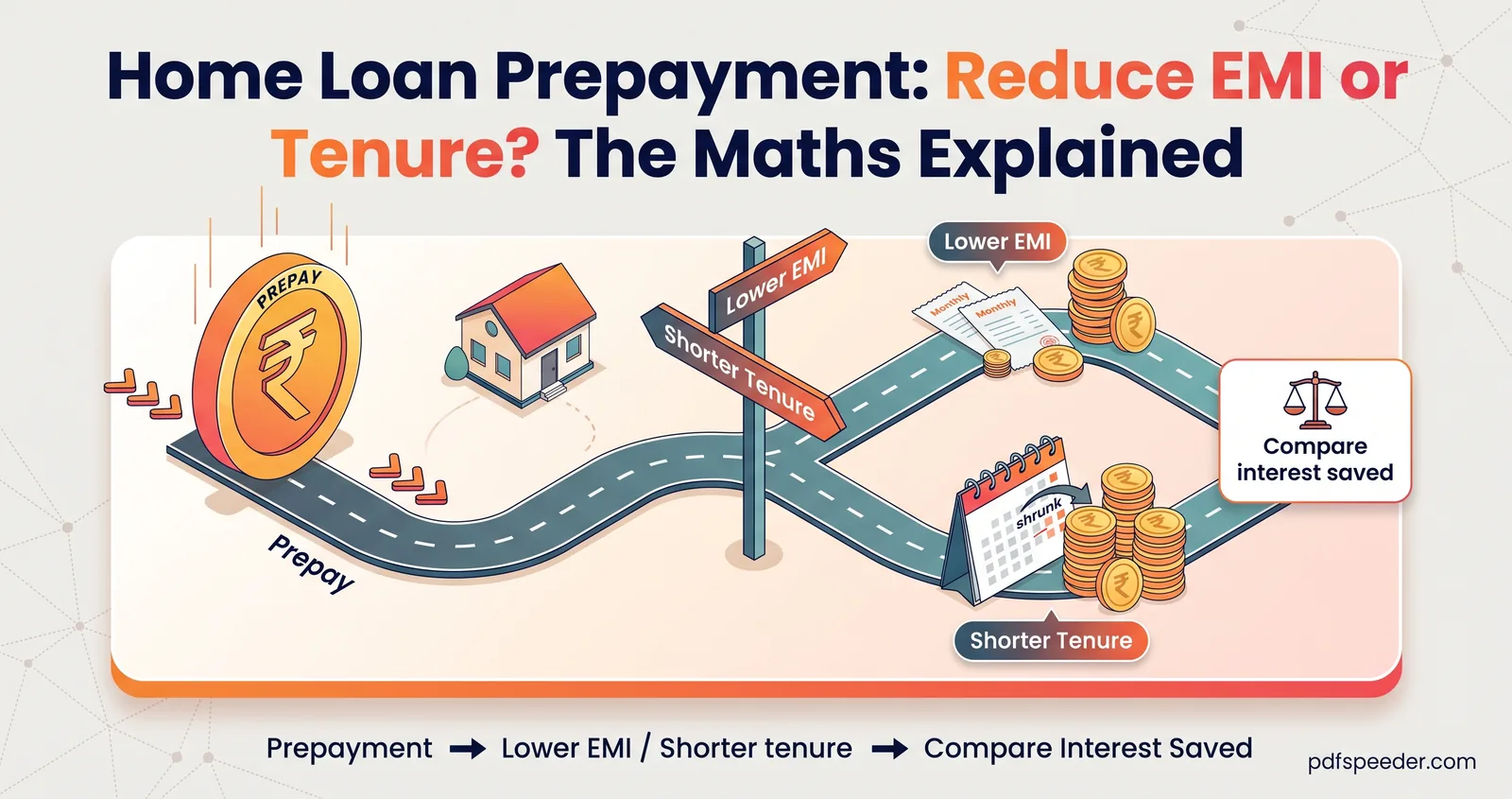
- Choose a longer tenure, within the lender's age limit, and plan to prepay later. Our guide to home loan prepayment shows how much interest that can save.
- Clear small loans and card balances before you apply, as the example above shows.
- Protect your rate. A clean repayment record helps you qualify for a lower rate, and going from 9% to 8% raises eligibility on a ₹25,000 EMI by ₹2,10,233.
- Show all your regular income. Lenders decide what counts, but documented income such as rent you receive may be included; ask before you apply.
- Save a bigger down payment. It doesn't raise eligibility, but it lowers the loan you need and keeps you inside the LTV cap.
One caution before you push for the maximum: a 50% FOIR leaves the other half of your take-home pay for everything else, including rent until you move, school fees, insurance and savings. The largest loan a bank will approve isn't automatically one you can carry comfortably.
Check your own numbers
Our Loan Eligibility Calculator runs this formula for you. It applies a 50% FOIR to the monthly income you enter, subtracts your existing EMIs and works backwards from the rate and tenure, showing the maximum loan, the affordable EMI and your debt-to-income ratio. It opens on ₹50,000 of income, ₹10,000 of existing EMIs, 8.5% and 10 years; switch the currency to INR first, because it starts in US dollars. The 50% is fixed, so if your lender uses a different FOIR, work out the affordable EMI by hand and try loan amounts in the EMI Calculator until the EMI matches.
Once you have a figure, the Home Loan EMI Calculator shows the total interest and a year-by-year schedule for it. All three calculators run in your browser.
Note: This article is for information only and is not financial advice. The FOIR, rates and tenures above are examples; the lender's own assessment decides how much you can borrow.
Your next step: add up the EMIs you pay today, take your latest payslip's take-home figure, and run both through the Loan Eligibility Calculator at the rate a lender has actually offered you.
Frequently asked questions
How much home loan can I get on a ₹50,000 salary?
About ₹29.9 lakh, assuming a 50% FOIR, an 8% rate, a 20-year tenure and no other EMIs. At a 40% FOIR it's about ₹23.9 lakh, and at 60% about ₹35.9 lakh.
What is FOIR for a home loan?
FOIR is the share of your monthly income that a lender allows for all your EMIs, including the new home loan. Each lender sets its own limit, and figures between 40% and 60% are commonly quoted.
Is home loan eligibility based on gross or net salary?
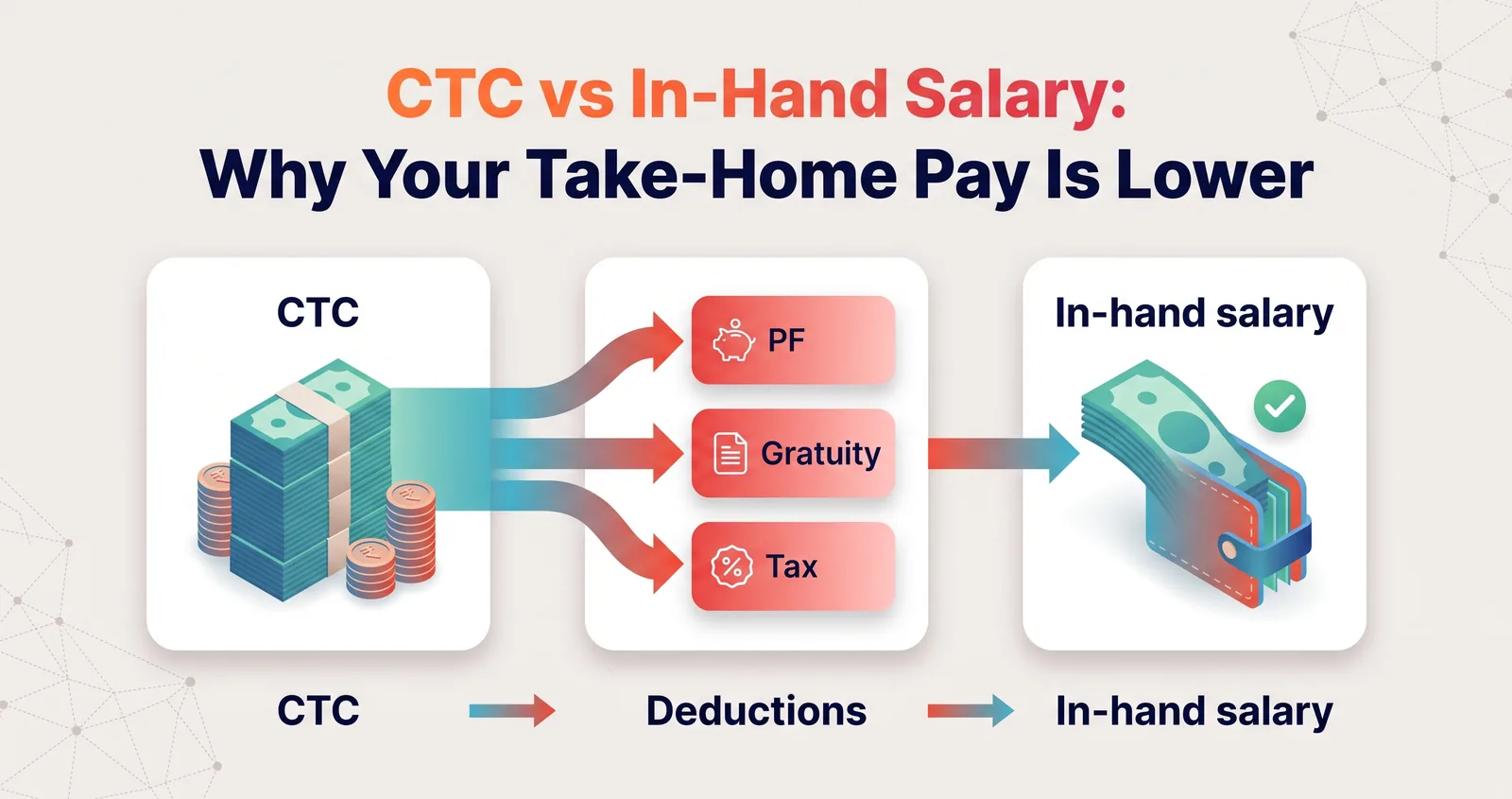
It depends on the lender's policy, so ask. Working from your take-home pay gives the more conservative estimate, and our guide to CTC vs in-hand salary shows how to find that figure.
Can I get a home loan for the full price of the property?
Not from a bank. RBI caps housing loans at 90% of the property's value for loans up to ₹30 lakh, 80% up to ₹75 lakh and 75% above that, and stamp duty and registration aren't counted in the value.
Does a longer tenure increase home loan eligibility?
Yes, because the same EMI repays a bigger loan over more months. On a ₹25,000 EMI at 8%, moving from 20 to 30 years adds about ₹4.2 lakh of eligibility, but about ₹25.8 lakh more interest.